
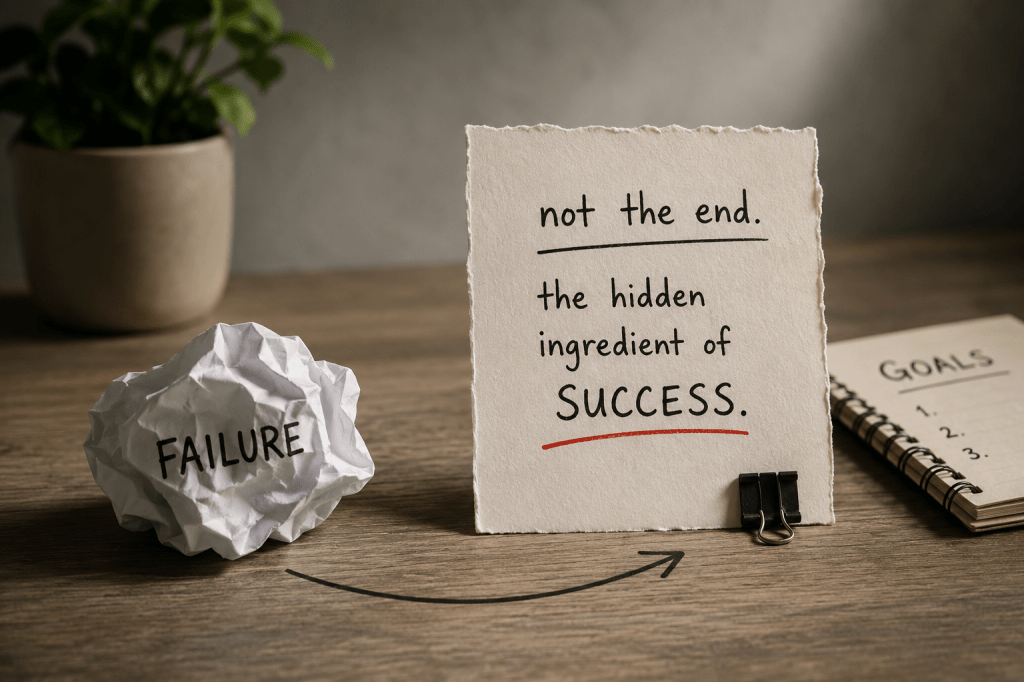
We live in a world that loves the highlight reel—the championships, the big wins, the success stories neatly packaged with a bow. But what often gets edited out is the messy, uncomfortable middle: the part where things fall apart, ideas flop, plans fail, and confidence dips. Yet this is the exact place where success actually begins. Failure isn’t the opposite of success.
It’s the blueprint, the training ground, and the fuel. And without it, true growth isn’t possible.
Failure Teaches Lessons Success Never Could
Success feels great, but it often teaches us very little. Failure, on the other hand, forces reflection and pushes us to analyze what went wrong, ask deeper questions, and build resilience. When something doesn’t work out, we get back up to try again, and we gain clarity:
• Was this the right approach?
• Did I prepare enough?
• What needs to change next time?
These lessons create a stronger, smarter, and more strategic version of us—the version that’s capable of achieving big things.
Failure Builds Resilience and Character
Every setback we overcome adds a layer of strength. Think of resilience like a muscle: you can’t build it without resistance and consistency. People who avoid failure often avoid challenges altogether. But the ones who embrace failure become:
• More resourceful
• More confident in uncertainty
• More willing to take bold steps
• More patient with the process
They know that every stumble isn’t the end—it’s just another step forward.
Failure Forces Creativity
When the original plan collapses, we’re pushed to innovate. Some of the world’s greatest breakthroughs came after failure closed the first door:
• Lightbulb experiments gone wrong
• Drafts rejected before becoming bestsellers
• Businesses that pivoted after initial losses
Failure pushes us out of “what is” and into “what could be.”
Failure Strengthens Emotional Intelligence
We learn more about ourselves in failure than we ever do in success:
• How we react under pressure
• What our triggers are
• What matters most to us
• What we’re truly capable of handling
This level of self-awareness is essential not just for success, but for leadership, relationships, and personal well-being.
Success After Failure Feels Different
When success comes too easily, it doesn’t carry much weight. But success that follows failures, pivots, growth, and grit—that success feels earned. Transformation occurs – changes how you view yourself and reminders that you’re capable of far more than you imagined. The most powerful victories are the ones we fought for.
Failure Isn’t a Dead End—it’s Data
Instead of seeing failure as a final verdict, see it as information. Every attempt gives you: data about what works, what doesn’t, and what could work with adjustments.
In this mindset, failure becomes less emotional and more strategic. You’re not failing—you’re gathering intel.
The Only True Failure Is Stopping
If failure is inevitable, and success is achievable through persistence, then the only real “failure” is quitting. Every great success story shares one common theme:
They didn’t stop.
Even when they were tired, discouraged, or when the results didn’t show up yet… Success doesn’t just require skill—it requires stamina.
Final Thought: Celebrate the Stumbles
Instead of fearing failure, what if we learned to appreciate it? Because every misstep means: You were brave enough to try, willing to grow and moving forward. Failure isn’t proof that you’re not capable—it’s proof that you’re on the path.
Success becomes possible because you failed first.




Leave a Reply